A mixed-use property combines two or more land uses within a single building or development — most commonly ground-floor retail or office space with residential apartments above. Mixed-use properties are a cornerstone of urban planning, walkable neighborhoods, and transit-oriented development across the country.
Commercial Loan Direct provides financing for mixed-use properties nationwide, working with a broad lender network to match each deal with the right program. Whether you're acquiring an existing urban main street building, refinancing a retail-residential asset, or developing a new mixed-use project, we have the programs and expertise to close your loan.
Mixed-Use Loan Rates
We offer a full suite of financing options for mixed-use properties. The right program depends on your property's commercial-to-residential income ratio, your ownership goals, and your financial profile.
| Loan Type | Min Loan Amount | Max LTV | Term Length | Amortization | Rates |
|---|---|---|---|---|---|
| Conventional | $1,000,000 | 75 | 3 - 15 Years | 15 - 30 Years | 6.17% - 9.21% |
| CMBS | $2,000,000 | 75 | 5 - 10 Years | 20 - 30 Years | 6.78% - 8.46% |
| Insurance | $5,000,000 | 75 | 5 - 30 Years | 15 - 30 Years | 6.28% - 9.13% |
| USDA | $1,000,000 | 85 | 5 - 15 Years | 15 - 30 Years | 6.00% - 8.75% |
| Bridge | $3,000,000 | 75 | 1 - 3 Years | 15 - 30 Years | 5.75% - 12.75% |
| Construction | $3,000,000 | 75 | 1 - 3 Years | 15 - 30 Years | 5.50% - 8.75% |
| Loan Type | Min Loan Amount | Max LTV | Term Length | Amortization | Rates |
|---|---|---|---|---|---|
| Conventional | $1,000,000 | 80 | 3 - 15 Years | 15 - 30 Years | 6.17% - 9.21% |
| USDA | $1,000,000 | 85 | 5 - 15 Years | 15 - 30 Years | 6.00% - 8.75% |
| SBA | $1,000,000 | 90 | 3 - 25 Years | 15 - 30 Years | 6.53% - 6.59% |
Mixed-Use Property Types We Finance
Mixed-use financing applies to a wide range of property configurations. Here are the most common types we work with:
Retail + Residential
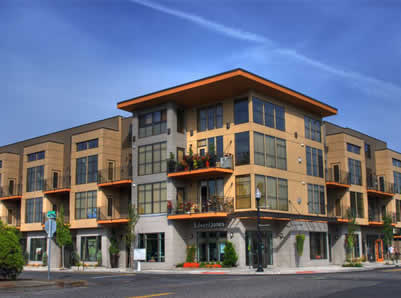
Ground-floor retail with apartments above — the most common mixed-use configuration in urban and suburban markets.
Office + Residential
Professional office space combined with multifamily residential units, common in mid-rise urban buildings.
Live-Work Units
Spaces designed for residents who also operate a business from the property — popular with artists, designers, and small business owners.
Transit-Oriented Development
High-density mixed-use projects built around public transit hubs — a growing priority in major metro markets.
Urban Main Street Buildings
Historic or traditional main street buildings with commercial ground floors and residential or office upper floors.
Hotel + Retail
Hospitality properties with ground-floor retail, restaurants, or entertainment space as part of the overall development.
Creative / Adaptive Reuse
Former industrial or warehouse buildings converted to mixed-use with loft residential and commercial ground-floor space.
New Construction Mixed-Use
Ground-up development of mixed-use buildings, including podium construction with commercial retail base and residential above.
How Lenders Underwrite Mixed-Use Properties
Mixed-use financing is more nuanced than a purely residential or purely commercial loan. Lenders must evaluate two distinct income streams and determine how to blend them into a single underwriting decision. Here's what they focus on:
Key Underwriting Metrics for Mixed-Use Properties
| Factor | Commercial Component | Residential Component | Combined Analysis |
|---|---|---|---|
| Income Source | Signed leases, NNN income, percentage rent | Market rents, current rent roll, vacancy rate | Weighted Effective Gross Income |
| Vacancy Assumption | 5–10% depending on market | 5–7% multifamily standard | Blended by square footage |
| Expense Ratio | Lower if NNN leases; higher for gross | 35–45% of EGI (operating expenses) | Pro-rated by use |
| Cap Rate / Value | Commercial cap rate for retail/office | Multifamily cap rate | Blended or income approach |
| Lease Term Scrutiny | High — must exceed loan term ideally | Month-to-month typically acceptable | Credit tenants improve underwriting |
The income split between commercial and residential is critical to determining which loan products are available. Properties where commercial income exceeds 50% of total gross income will typically be underwritten as pure commercial loans, accessing CMBS, life company, and bank programs. Properties with predominantly residential income may qualify for agency programs (Fannie Mae / Freddie Mac) that typically offer the lowest rates — provided the commercial space is incidental to the residential use.
Important Considerations for Mixed-Use Borrowers
Commercial Tenant Credit Quality
Lenders pay close attention to the credit quality and lease terms of your commercial tenants. A single national credit tenant on a long-term NNN lease dramatically strengthens underwriting versus month-to-month local tenants. Vacant commercial space can significantly impair loan proceeds.
Zoning and Use Classification
Lenders verify that the property's current use is permitted under local zoning. Non-conforming uses — where the property doesn't comply with current zoning code — can create lending challenges. Confirm your property's legal conforming status before applying.
Appraisal Complexity
Mixed-use appraisals are more complex than single-use properties. The appraiser must value both the commercial and residential components, often using different methodologies for each, then reconcile them into a final value. Budget additional time and cost for the appraisal process.
SBA Owner-Occupancy Requirement
SBA programs for mixed-use require that the borrower's business occupy at least 51% of the total usable square footage. If you operate a business from your property, SBA 504 can provide up to 90% LTV with below-market fixed rates — a major advantage.
Mixed-Use Property Markets
Mixed-use development is concentrated in several distinct market types, each with different lending dynamics:
- Urban Core Markets — High demand from both residential tenants and commercial users. Strong historical performance but higher acquisition costs and complex zoning regulations. CMBS and life company financing commonly available.
- Urban Infill & Gentrifying Neighborhoods — Value-add opportunities where rising residential rents support commercial rent growth. Bridge and renovation financing often needed before stabilized permanent financing.
- Suburban Town Centers — Walkable suburban mixed-use has expanded significantly. Lower land costs than urban core with strong retail and residential fundamentals. Conventional and SBA programs widely available.
- Transit-Oriented Districts — Properties within walking distance of rail or bus rapid transit command premium valuations. Increasingly favored by life companies and institutional lenders.
- Small Town Main Street — Historic main street buildings present unique financing considerations. USDA Business & Industry programs and SBA 504 can be particularly well-suited for eligible rural and small-city markets.